History
The evolution and heritage of the Catholic Church in the Albanian lands
The Spread of Christianity in Kosovo
Christianity among the Illyrians
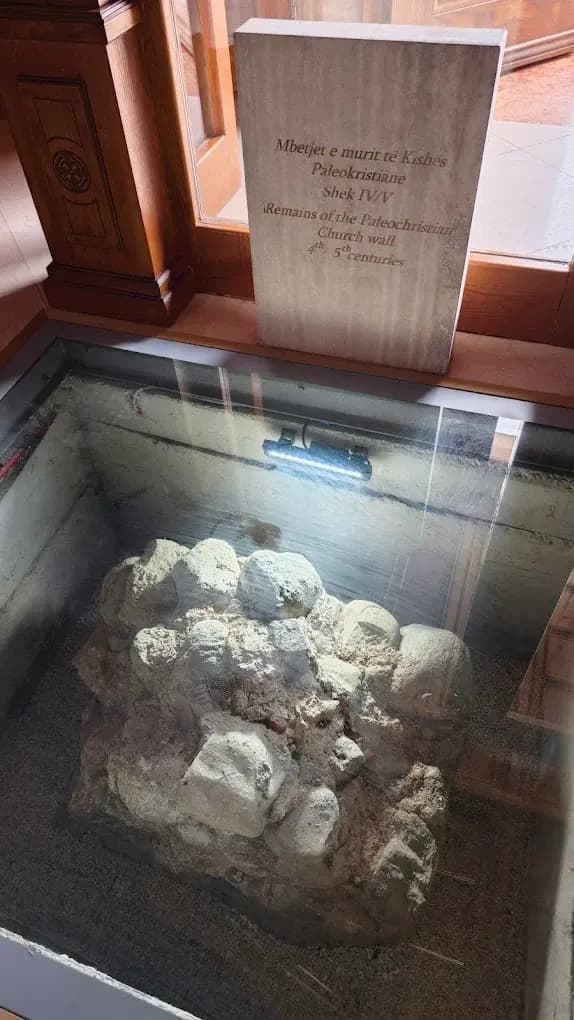
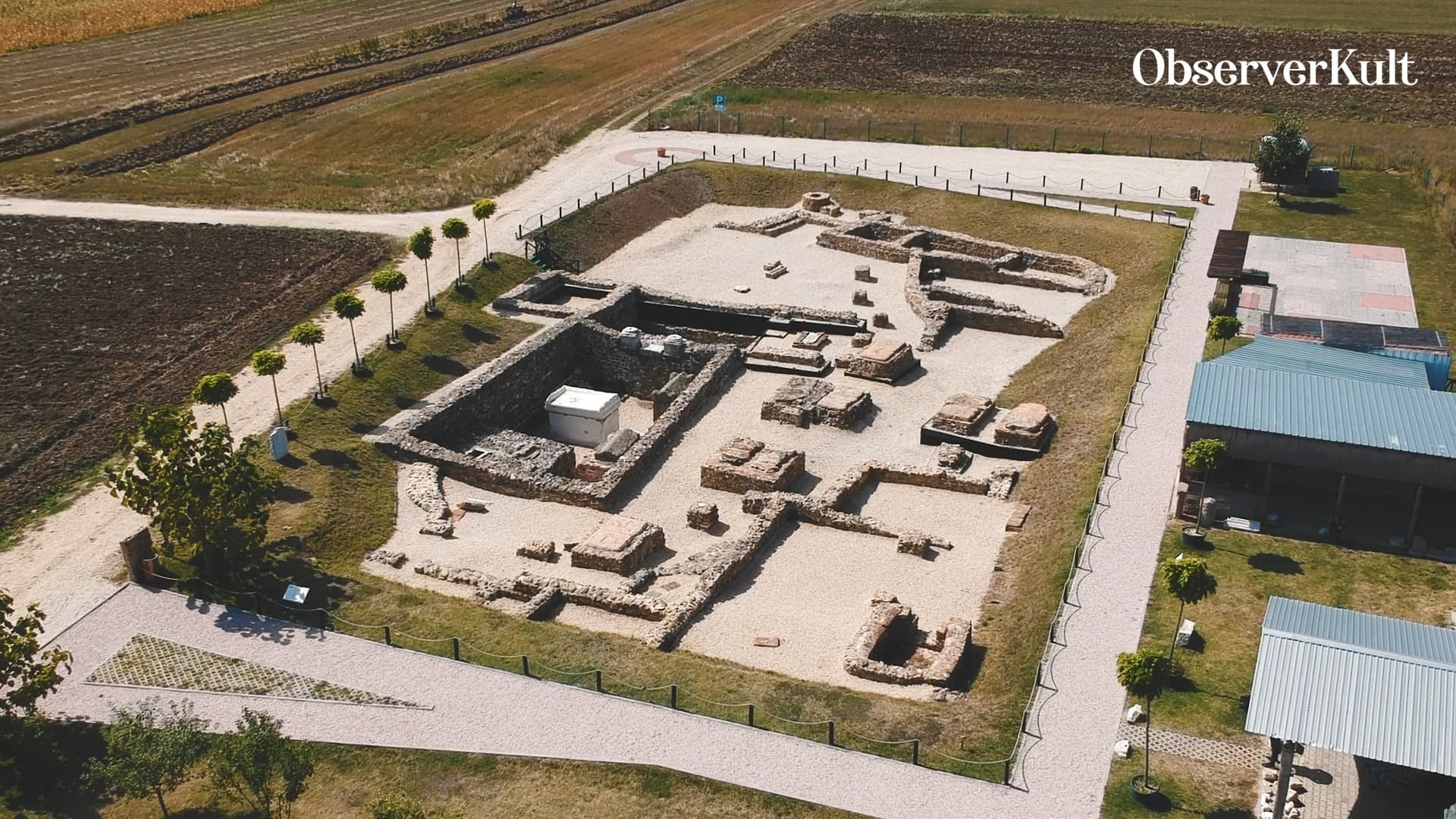
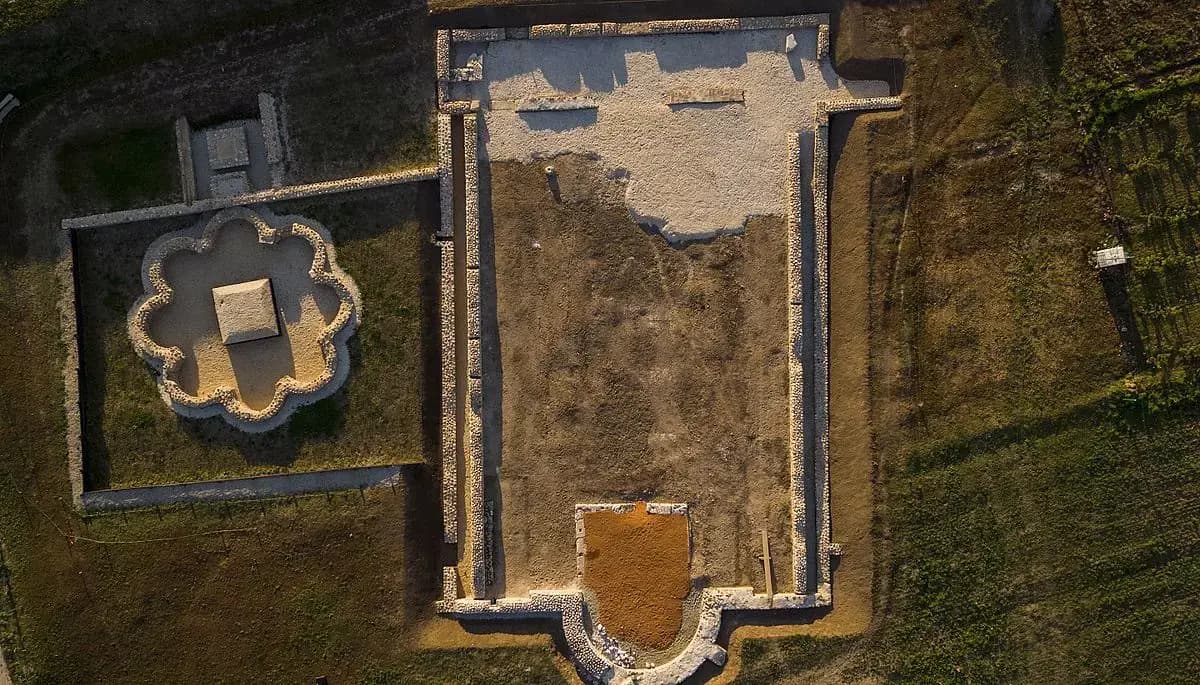
Christianity among the Illyrians has ancient apostolic roots, from its very beginnings, with Saint Paul and his disciples, who brought the Gospel to our forefathers. Of this we have biblical, historical, and archaeological evidence, which convincingly shows that our forefathers, the Illyrians, were the first people in the Mediterranean and in Europe to be evangelized and to accept Jesus Christ, the Savior of all humanity. For our Kosovo, the former Dardania, the martyrs Saint Florus and Laurus bear witness, the builders of the pagan temple in Ulpiana at the request of the Roman Emperor Hadrian (117-138). Then at the Council of Nicaea (325), which the Roman Emperor Constantine the Great — an Illyrian, a Dardanian, who had also given the Edict of Milan (313) granting religious freedom to Christians — had convened and organized, the bishop Dacus Dardaniae – Daku the Dardanian also took part.
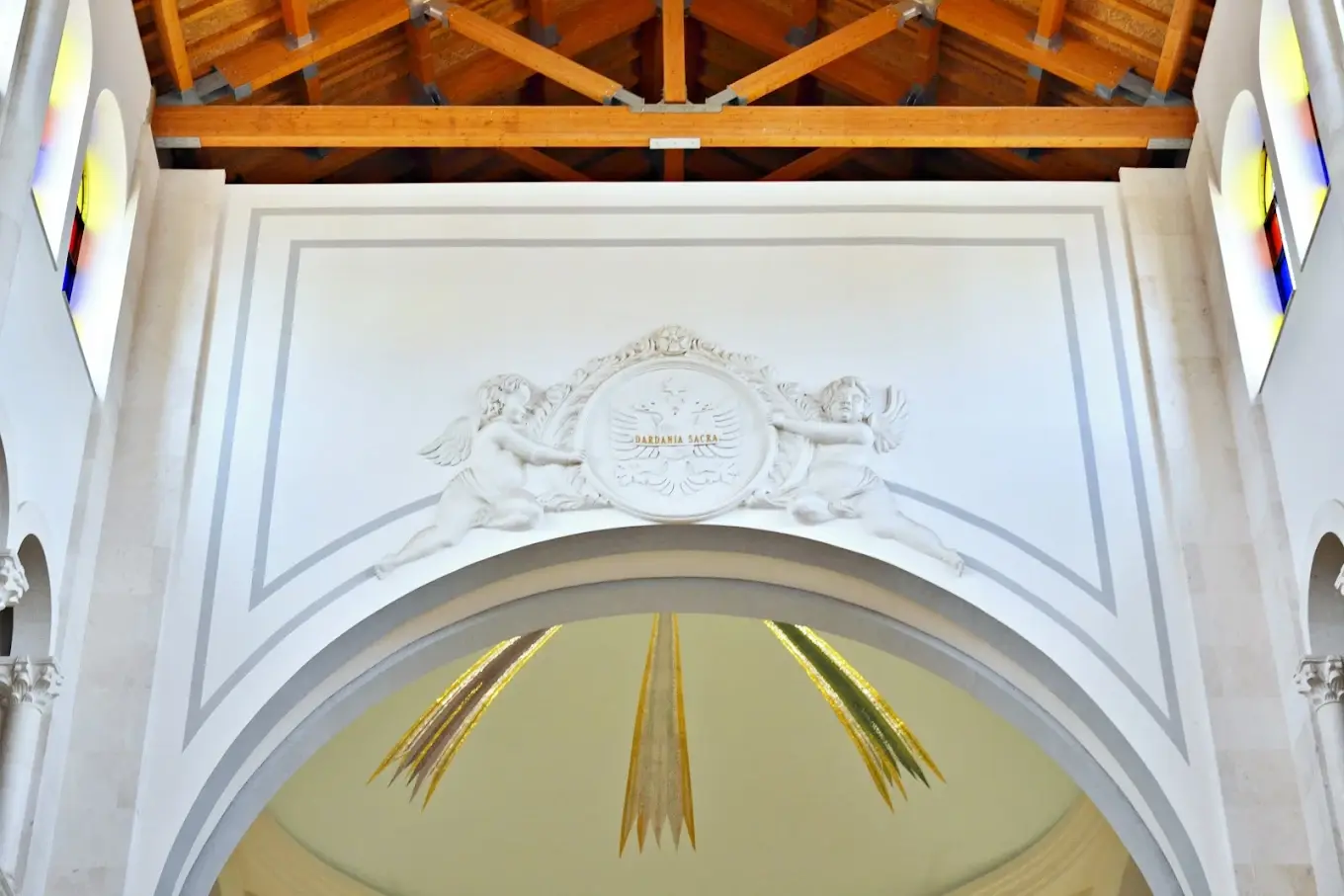
After the granting of religious freedom, Christianity flourished and progressed rapidly in almost all the lands of "Illiricum sacrum" and "Dardania sacra," where our ancestors lived.
Our Albanian people, as descendants of the Illyrians, are autochthonous from antiquity that surpasses every memory or historical knowledge. Saint Paul himself mentions Illyricum, Epirus, Dalmatia, and Macedonia. He writes thus: "So that from Jerusalem and all around as far as Illyricum I have spread the Gospel of Christ" (Rom 15:19). In another place he wrote thus to Titus: "When I send Artemas or Tychicus to you, hasten and come to me at Nicopolis, for there I have decided to spend the winter" (Tit 3:12; cf. Tit 3:7; 2 Tim 4:10). Nicopolis at that time was the most renowned city of Epirus, in the vicinity of Illyricum. The areas where the Illyrians chiefly lived were: Praevalitana, Epirus, Dardania, and Macedonia,
During the reign of Emperor Hadrian (117-138), there were several persecutions against Christians in Ulpiana, the capital of Dardania, present-day Kosovo, where two distinguished martyrs stand out: Saint Florus and Saint Laurus, who represent the origin, the "cradle," and the Christian roots. The genuine roots of charity and generosity, of Illyrian, Arberian, and Albanian hospitality, are present from the time of Saint Florus and Laurus, who had baptized a good portion of the co-builders of the "Roman Temple," as well as fellow citizens of Ulpiana, precisely by drawing on Christian love, which was expressed, given, and witnessed through Christian charity and brotherhood.
After centuries of persecutions against Christians, finally came the Edict of Milan (313) of Constantine the Great, of Illyrian and Dardanian origin, which granted religious freedom also to Christians, and finally he too became a Christian. This event caused Christianity to flourish in the Mediterranean as well as in various parts of Europe and the world, especially in the Illyrian lands, where for centuries the seed of Jesus Christ and faithfulness to the Catholic Church had been watered with blood. Already at the Council of Nicaea (325), where the fundamental truths of the Christian faith, the Creed, were defined, two bishops from our regions were present: Daccus Dardaniae, and the bishop of Stobi, Budius Stobiensi, which convincingly attests that Christianity in these regions was already well organized and flourishing.
The Church Suffers and Endures
The period of Turkish-Ottoman rule (1468-1912) was difficult and exceedingly dark. After the heroic 25-year resistance of the national hero George Castriot – Skanderbeg (1405-1468), the Illyrian-Arberian lands fell under Turkish-Ottoman rule. Some Albanians emigrated to Venice; others, to escape violence and vendettas, went to Southern Italy — today's Arbëreshë, in Calabria and Sicily — and elsewhere. Turkish-Ottoman rule caused the Islamization of a great part of our people.
From Christianity within the Albanian people, not by chance during the centuries of Turkish-Ottoman rule, we have luminous figures of faith and nation, such as Bishop Pal Engjëlli, Don Marin Barleti, Bishop Pjetër Budi, Bishop Pjetër Bogdani, Pope Clement XI – Albani, down to Father Gjergj Fishta, Father Shtjefën Gjeçovi, and many, many others. Without their work and contribution, the Christian faith would not have been preserved in our People, nor the Illyrian, Arberian, and Albanian national consciousness, nor our language, tradition, and our ancient and most glorious culture.
Challenges and Trials in the 20th Century
In the continuity of this tradition, antiquity, autochthony, and martyrdom, from our ancient yet ever-living, underground roots, two religious and spiritual protagonists of the 20th century were born and grew up: Athenagoras I (1886-1972), and Saint Mother Teresa (1910-1997), who gave a "new breath" to the Church and the world. The first, with ecumenical and interreligious dialogue; the second, with the power of faith and the inspiration of love for all.
After the various storms that had struck the Christian faith for almost many centuries, it seemed that the 20th century would be at least somewhat better and more favorable for us and for our Church among Albanians. However, this was only partly the case. With the collapse of the Turkish-Ottoman empire and the formation of Albania, our lands and people were subjected to a kind of dishonest "trade or bargaining" by the appetites of the great powers and insatiable neighbors. The formation of the Albanian state was a small success for us, since a great part of our lands and people remained outside, fragmented and once again subjugated by new rulers.
If our millennial history is analyzed and examined, then we may truly affirm two miracles: a) our national survival, as Illyrians, Arberians, and Albanians, and b) the miracle of miracles, the survival of the Christian faith among our People. These two exceedingly great and very important gifts, in many ways even decisive, are without doubt the fruit of Divine Providence and of our very difficult, bloody, and exceedingly glorious history.
In ecclesiastical terms, our faithful in the 20th century still experienced many ebbs and flows. Here are just a few of them: On 24 August 1914, the concordat between the Holy See – Vatican and Serbia was signed, by which our Diocese with its See in Skopje was stripped of the title of archdiocese, transferring the same to the Diocese of Belgrade.
And it does not end there. The state of the old, royal Yugoslavia, in many ways, was similar to the Turkish-Ottoman one; for us there was no justice or freedom whatsoever. The lack of Albanian schools — those few that had survived from the time of Turkey — were closed and persecuted. This caused the lack of our local clergy, who were replaced with foreign clergy. Archbishop Bishop Lazër Mjeda was forced to leave the episcopal see, and on 19 October he was officially transferred to Shkodra, of course under the influence and pressure of Slavic politics. He, in fact, had even earlier left Skopje and the see, leaving the clergy and people without a Shepherd, and during the period of the vacant see "sede vacante," the administrator was Don Tomë Gllasnoviqi.
Politics had influenced, and to a certain extent even conditioned, the appointments of three generations of non-Albanian bishops: Bishop Ivan Gnidovec (1924 – 1939); Bishop Smiljan Franjo Čekada (1940 – 1967); and Bishop Joakim Herbut (1969 – 1992), while the auxiliary bishop "sedi datus" for the Albanians was Bishop Nikë Prela (1969 – 1996).
The Holy See, headed by Pope Saint Paul VI, sought in some way to remedy these difficulties and obstacles, with special care for our small flock that had survived the centuries-old storms. Thus, on 20 October 1969, after the appointment of two new bishops, the former episcopal see of Prizren was renewed, immediately linking it with Skopje — that is, the Diocese of Skopje-Prizren was formed.
Spiritual and Ecclesial Renewal
With the arrival of the Albanian bishop Bishop Nikë Prela, much changed and improved. The number of priestly and religious vocations grew steadily; new churches were built, and old churches and parish houses were renovated; regular catechism for children began, and partly also for youth. Within this comprehensive vitality, the Albanian Catholic press began with the religious and cultural magazine "DRITA," which then grew and developed into a publishing house, the only such Catholic one at the time.
In short, our Church emerges from the "sacristy" and the church courtyard, becoming ever more present on the stage of the people's life, with participation in Albanian social and cultural events in Kosovo and beyond, such as the Reconciliations of Blood Feuds, the Humanitarian Charitable Society of Kosovo "Mother Teresa," Caritas of Kosovo, the support of the parallel school and health system, the defense of our people unjustly oppressed and persecuted among us, in former Yugoslavia, and in the world. Our voice now becomes powerful, our presence very vibrant and strong, our stances prophetic and providential, not only for Albanian Catholics, but for our entire Nation.
From this difficult and challenging experience for our People and our Kosovo, Dr. Ibrahim Rugova came to the fore — a scholarly figure on Bishop Pjetër Bogdani, charismatic and visionary, later the creator and supporter of the peaceful nonviolent strategy, our historic President, whom our Church continually supported.
The unprecedented Serbian violence against the innocent and defenseless Albanian population compelled us to defend our lives, homes, and hearths — especially the children, the elderly, and the women — even with arms through the KLA, as a worldwide testimony that everything has a limit.
In the period before, during, and after the War, at the head of the Diocese was our Shepherd Bishop Mark Sopi (1996 – 2006), who courageously and wisely continued in the line of Bishop Nikë Prela and our prelates throughout the centuries, for God and for the People, with efforts and activity for the benefit and good of our faithful, but also of all Kosovo, with dignified and well-argued presentations in Euro-American forums, with humanitarian aid, with full support of peace and reconciliation among us.
The Holy See, after the "ad interim" separation from Skopje (1992), made a decision and found a kind of temporary solution (2000), immediately after the War and NATO's intervention in Kosovo, by declaring our Diocese of Skopje–Prizren the Apostolic Administration of Prizren (for the part of Kosovo), and finally separating it from the Diocese of Skopje, in parallel with the international administration of Kosovo through UNMIK.
After the unexpected death of Bishop Mark Sopi (11 January 2006), the Apostolic Administration of Prizren was led by Bishop Zef Gashi, as apostolic administrator, until the appointment of Bishop Dodë Gjergji (2006 – ), our current bishop.
Bishop Dodë Gjergji undertook many initiatives, among which the following stand out: the resumption of the magazine "DRITA" and its publications, which had not been published since the 1990s for known reasons; the restructuring of pastors throughout parishes and Albanian Catholic Missions in Europe; the construction of the Episcopal Residence, the Cathedral, and the Shrine of Saint Mother Teresa in Pristina; the drafting and publication of the pastoral plan for the Apostolic Administration of Prizren, entitled "We Serve with Humility and Proclaim with Joy" 2015-2020; the founding of the Diocesan Catechetical School in Pristina (2014); the celebration of the 100th anniversary of the birth of Mother Teresa (2010); the consecration of the Cathedral and Shrine "Mother Teresa" in Pristina in 2017.
The consecration was a great work of God, the fatherly care of Pope Francis toward the Apostolic Administration of Prizren, of Kosovo, with historical and contemporary significance. Presiding over the solemn Mass was our Cardinal Ernest Simoni, the special and personal envoy of Pope Francis, with Bishop Dodë Gjergji and many bishops, priests, and faithful from various countries of the world.
Pope Francis had written and decreed thus: "In order to carry out this rite as gloriously as possible, We have decided to send Our representative.
To you, our honored Brother, son of this People, We appoint and proclaim Our extraordinary Envoy.
Therefore, you shall preside at the sacred liturgy, while the Honored Brother Dodë Gjergji, Apostolic Administrator of Prizren, shall consecrate, on 5 September, with solemn rite this holy Temple dedicated to Saint Mother Teresa of Calcutta.
I emphasize that this beautiful Shrine should help to strengthen the true faith of the faithful. With pleasure We extend the Apostolic Blessing, first upon You, and through You, in Our name, upon all those present, that this blessing, through the intercession of the Blessed Virgin Mary and Saint Teresa, may be a fount of lofty graces for the renewal of souls, while We, with the authority of Saint Peter, united in prayer, pray that this blessing may be as fruitful as possible."
From the See of the Vatican, 1 August 2017, the fifth year of Our Pontificate. Francis
The Shrine of Saint Mother Teresa in the capital of Kosovo, Pristina, has two essential aims and purposes: her "return" or incarnation in our minds and hearts, as well as her intercession for our Church and People. Thus, in this "school" of love, we will learn and apply the culture of life and the civilization of love, virtues which Mother Teresa took up among us and witnessed to and carried throughout the whole world.
One year later, on 5 September 2018, from God, through Pope Francis, another piece of news and a great gift came to us: the elevation of the Apostolic Administration of Prizren to the new Diocese of Prizren – Pristina, on the second anniversary of the canonization of Mother Teresa and the first anniversary of the consecration of the cathedral dedicated to her.
The Apostolic Nuncio for Kosovo, His Excellency Bishop Juliusz Janusz, during the festive Mass with Bishop Dodë Gjergji and Bishop Rrok Gjonlleshaj, in the presence of many faithful and citizens who had come from other places of Kosovo and beyond, representatives of various religious communities, deputies of the Assembly of Kosovo, friends, and personalities of culture and art, said among other things:
"I have a special feeling that we are once again together in Pristina, in this wonderful Shrine dedicated to our Mother, Saint Mother Teresa, which you have built with your generosity, with your hearts. Perhaps it could not be otherwise, since Saint Mother Teresa was the founder of the Congregation "Missionaries of Charity" in Calcutta in 1950. The fifth of September remains not only in the history of Kosovo, but of the whole world; it is the Day of the Canonization of Mother Teresa.
Mother Teresa testified that Love is difficult, just as martyrdom is, because building love without distinction of race, religion, or color, are works of hers comparable to martyrdom," the Nuncio concluded.
Afterwards His Excellency, Bishop Dodë Gjergji, after thanking the Apostolic Nuncio for his participation and his homily, continued thus: "We are very joyful for this gift of God and of the Pope, for the news that we are now the Diocese of Prizren – Pristina. The people of Kosovo are grateful and thankful to Saint Paul, who spread the joyful news of Christianity as far as Illyricum; then to the centuries-long sufferings of our people, to Bishop Pjetër Bogdani, to Mother Teresa, and so on, who kept alive the faith of our forefathers, generation after generation, down to our days, so that the Catholic Church is flourishing day by day in our country, in today's Kosovo, the former Dardania," Bishop Dodë Gjergji concluded.
The Bull of the Elevation of the Apostolic Administration to the Diocese of Prizren – Pristina
The Apostolic Administration of Prizren is raised to the rank and dignity of a diocese, to be called Prizren – Pristina, and this new ecclesial unit has its own bishop.
Francis Bishop, Servant of the servants of God, in everlasting memory.
There has been entrusted to Us, by the Lord Himself of the entire universal Church, the whole ministry of care for swift development, so that those saving goods and teachings may reach without delay and with success in every place. Therefore, We have decided to expedite and arrange this matter as soon and as easily as possible. For this reason, with our Honored Brother Dominic (Dodë) Gjergji, former bishop in Sapa, Apostolic Administrator in Prizren, who has requested that his ecclesial circumscription be raised to the rank and dignity of a diocese, supported by the Honored Brother Juliusz Janusz, titular archbishop of Caprulanos and Apostolic Delegate of the country called Kosovo, on the advice of the Secretariat of State and the Congregation for Bishops, with our Apostolic Authority We have decided. The Apostolic Administration of Prizren shall be raised to the dignity of a diocese, henceforth to be called Prizren – Pristina, and shall be immediately subject to the Holy See, as such, preserving the boundaries which have been assigned to the dioceses of the International Episcopal Conference of Saints Cyril and Methodius, of which it is a member. Therefore, in the city of Prizren, the church bearing the name of Saint Mary Virgin Help of Christians, is raised to the dignity of the Cathedral Church, while at the same time the church of Pristina, consecrated in the Year of the Lord earlier, in honor of Saint Teresa of Calcutta, becomes a co-cathedral church, with both, distinguished, being granted equal privileges and honor. Other matters are regulated by canonical norms. Furthermore, We proclaim our Honored Brother Dodë Gjergji, by this ecclesial communication, Bishop and Shepherd, and he is released from his previous restrictions. We entrust all these matters to be transmitted through the Apostolic Delegate in Kosovo, naturally with the authority of any other person of ecclesial dignity appointed for delegation. To arrive at the final selection, with completed documents, naturally let them be sent to the Congregation for Bishops. This has force, notwithstanding any minor objections of anyone.
Rome, at Saint Peter's, the fifth day of the month of September 2018, of our Pontificate the sixth.
Pope Francis
Pietro Card. Parolin, Secretary of State
Marco Card. Quellet, Prefect of the Congregation for Bishops
The official proclamation of the Bull and the enthronement of Bishop Dodë Gjergji as bishop of the new Diocese of Prizren-Pristina took place on the Feast of Our Lady, Help of Christians, on 24 May 2019, in the Cathedral of Our Lady, Help of Christians, in Prizren, by the Apostolic Nuncio in Slovenia and Apostolic Delegate for Kosovo, His Excellency Bishop Jean-Marie Speich, in the presence of the diocesan clergy, religious men and women, and the People of God.
The Synodal Journey of the Universal and Local Church
The Church, as the mystical Body of Christ — that is, as the historical continuation of the work of salvation — has always at the center of her attention and her heart Jesus Christ, the work of salvation accomplished through his suffering, death, and resurrection "for us and for our salvation," a gift of the Father, through the influence and action of the Holy Spirit. It took place in time and in historical and geographical spaces, but it is a saving work for all humanity of every age and place.
Precisely for this reason, the incarnation of Jesus Christ and the work of salvation continue through the Church in the world — that is, also in today's world. How?
Through the proclamation, life, and witness of the newness of Christian life, which under the influence of grace makes possible for us the newness of conversion, improvement, and salvation. The Church, as Teacher and Mother, continually examines the concrete circumstances of human life and activity, under the influence of the Holy Spirit, in order to offer to each one the gift of grace and the possibility of salvation – eternal life.
She walks together with every person of good will and good heart, with the conviction, experience, and certainty that God is with us – Emmanuel, and that we are with Him, in building the Christian community, or as Pope Francis says, "the synodal journey in the third millennium."
Our local Church, if she analyzes her two-thousand-year journey and faithfulness, from Saint Paul and his disciples down to our time, under the wonderful influence and guidance of the Holy Spirit, a gift and inheritance of faithfulness, love, and survival, by itself speaks and calls her sons and daughters to find the thread that binds us to God, the Church, and one another.
The second aspect of our Church is almost the systematic and centuries-long martyrdom for Faith and Homeland, which fills us with hope and certainty that God has plans for us.
The third aspect is missionary spirit, where our forebears were an evangelical seed, not only for themselves, but also for surrounding regions and other peoples.
These three characteristics make us aware that we too should be "the light of the world and the salt of the earth," especially for our brothers who, due to circumstances already known, have been separated from Jesus Christ and from his Church.
Another very important aspect for the Church — therefore, also for the Church among us — is listening, conversation, dialogue, and communication with the human person, the family, and society here and now, as the People of God, as a "common journey," a precondition for evangelization and re-evangelization (cf. Documento Preparatorio, no. 2).
Listening to the human person, the family, the people, is listening to the Holy Spirit, who inspires, guides, and renews the Church in every place and time (cf. Idem, no. 32).
The central theme of the Synod is for a synodal Church which has the following characteristics: communion (comunio), participation (participazio), and mission (missio).
The Local Churches
The local Churches must enable broad and open consultation with everyone, especially with priests, religious men, religious women, and laity — among us especially with those who in recent years have newly joined themselves to Christ and to our Church.
What does this listening, dialogue, communication, and engagement bring?
Awareness, determination, orientation, conviction, and life with God, the Church, and one another.
Partnership – where no one is privileged or excluded, but all of us are sons and daughters of God, brothers and sisters with one another.
Continuous communication, throughout parishes, deaneries, dioceses.
Listening leads to discernment and the participation of all in the work of salvation.
The episcopal Synod gives an opportunity for a good number of the faithful to be an evangelical seed, where everyone has their own place, and there is no limit for the Holy Spirit (cf. Idem, no. 22 – 24).
The synodal journey has chiefly the following phases:
1. Appointment of the synodal Council at the diocesan level;
2. Creation of the diocesan synodal team;
3. Joint examination and discovery of particular issues for the local Church;
4. Planning and participation in the diocesan Synod;
5. Working groups with principles: listening, clear evangelical words and messages, eucharistic celebrations, sharing of responsibilities, dialogue with God, the Church, and our society today.
As a synthesis we may perhaps say also this: the best preparation for the Synod is prayer, the awakening of Christian awareness of responsibility for ourselves, for the Church, and for the world, especially listening – as an open and ongoing dialogue with God, the Church, and the world.