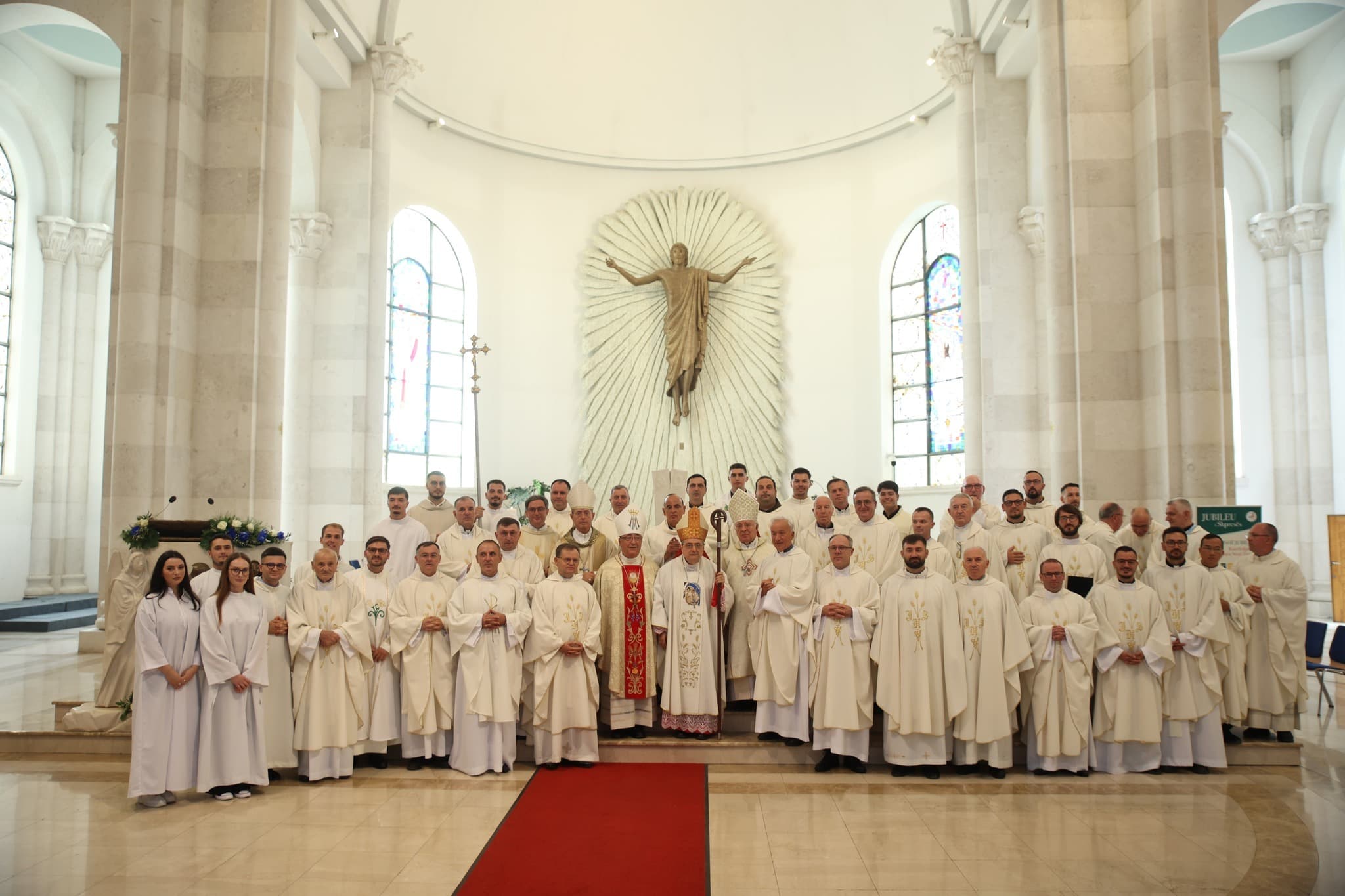
Clergy of the Church
Links to Catholic & Diocesan Resources
The spiritual leaders of the community
•Historical Roots and the Role of the Clergy
The Catholic Church in Kosovo has a deep and rich history, and Catholic clergy have always played an important role in religious, cultural, and national life. Even in difficult historical periods, such as during the Ottoman occupation, when many Albanians were forced to change their religion or hide their faith, priests kept tradition and religious education alive. They were a support to the faithful and guardians of the national language and culture. Well-known historical figures, such as Don Gjon Buzuku, translator of the Missal, and Archbishop Pjetër Bogdani, contributed to religious education and to the publication of the first works in the Albanian language, preserving Catholic identity and tradition. During the 18th and 19th centuries, Albanian clergy engaged in educational missions, liturgical publications, and the organization of religious assemblies, providing the Catholic flock with the spiritual and cultural leadership it needed to survive.
•Structure of the Clergy and Organization of the Diocese
Today, the Diocese of Prizren-Pristina represents the ecclesiastical structure of the Catholic Church in Kosovo. With its main seat in Prizren, it includes 24 parishes spread throughout the country, where diocesan priests and religious clergy such as Franciscans and Salesians serve. The number of priests is stable and fully committed to pastoral service, including the celebration of Masses, baptisms, conferences, and educational activities. Under the leadership of Bishop Dodë Gjergji, the diocese supports seminarians and the education of young people, ensuring spiritual and academic formation for the next generation of clergy.
•Pastoral and Social Activities
Catholic priests are engaged in all aspects of community life. In addition to celebrating the sacraments and daily Masses, they organize catechesis for children, seminars for young people, Bible reading groups, and educational programs for families. The "Mother Teresa" Cathedral in Pristina and the Church of Saint Anthony in Gjakova are the main centers where solemn liturgies and community activities take place. Social activity also includes humanitarian engagement through Caritas Kosovo, providing assistance to families in need, orphans, the elderly, and the most vulnerable communities. Priests lead long-term and immediate projects, promoting solidarity and interfaith cooperation.
•Distinguished Figures of the Clergy
In the history of the Albanian Catholic Church, many clergymen have left important marks. In addition to Don Gjon Buzuku and Pjetër Bogdani, other figures such as Vinçenc Zmajeviqi, Frang Bardhi, Shtjefën Gjeçovi, and Ndre Mjeda contributed to the preservation of the Albanian faith and culture. Today, Bishop Dodë Gjergji leads the diocese and promotes education, liturgical publications, and pastoral activities. Many young priests continue the tradition by leading seminaries and engaging in social and educational missions.
•Role in Interfaith Dialogue and Peace
Catholic clergy are also dedicated to building peace and interfaith dialogue. They promote coexistence and mutual respect among religious communities in Kosovo, organizing joint activities, interfaith forums, and humanitarian activities without distinction of faith. This commitment contributes to creating a more tolerant and supportive society, where faith serves as a bridge of connection rather than a barrier.